

The Cost of Masking: What High-Performing Neurodivergent Leaders Give Up to “Fit In”

Ten minutes before a board call, a founder is standing in her kitchen rehearsing how to sound calm. Not preparing the update because she already knows those numbers cold. She’s rehearsing her tone. Practicing the pause before she answers a question, so it doesn’t come out too fast, too blunt, too much. She’s done this before every investor call for three years. By the time she logs on, she’s already spent more energy managing how she’ll be perceived than she has on the actual content of the meeting.
That’s masking. Not lying, not incompetence but the constant, real-time editing of how you speak, move, react, and show up so that you read as “professional” instead of “different.” For neurodivergent leaders, with ADHD, autistic, or AuDHD tendencies, it’s often so automatic they stopped noticing they were doing it years ago. It just feels like what leadership requires.
Here’s the problem: what looks like polish from the outside is quietly running up a bill. This isn’t a piece about self-care or personal wellbeing, though that matters too. It’s about what masking actually costs you as a leader — the decisions it distorts, the culture it shapes without your consent, and the specific kind of burnout it creates at the top of a company, where there’s no one above you to notice you’re running on empty.
The Hidden Line Item: What Masking Actually Costs You Day to Day
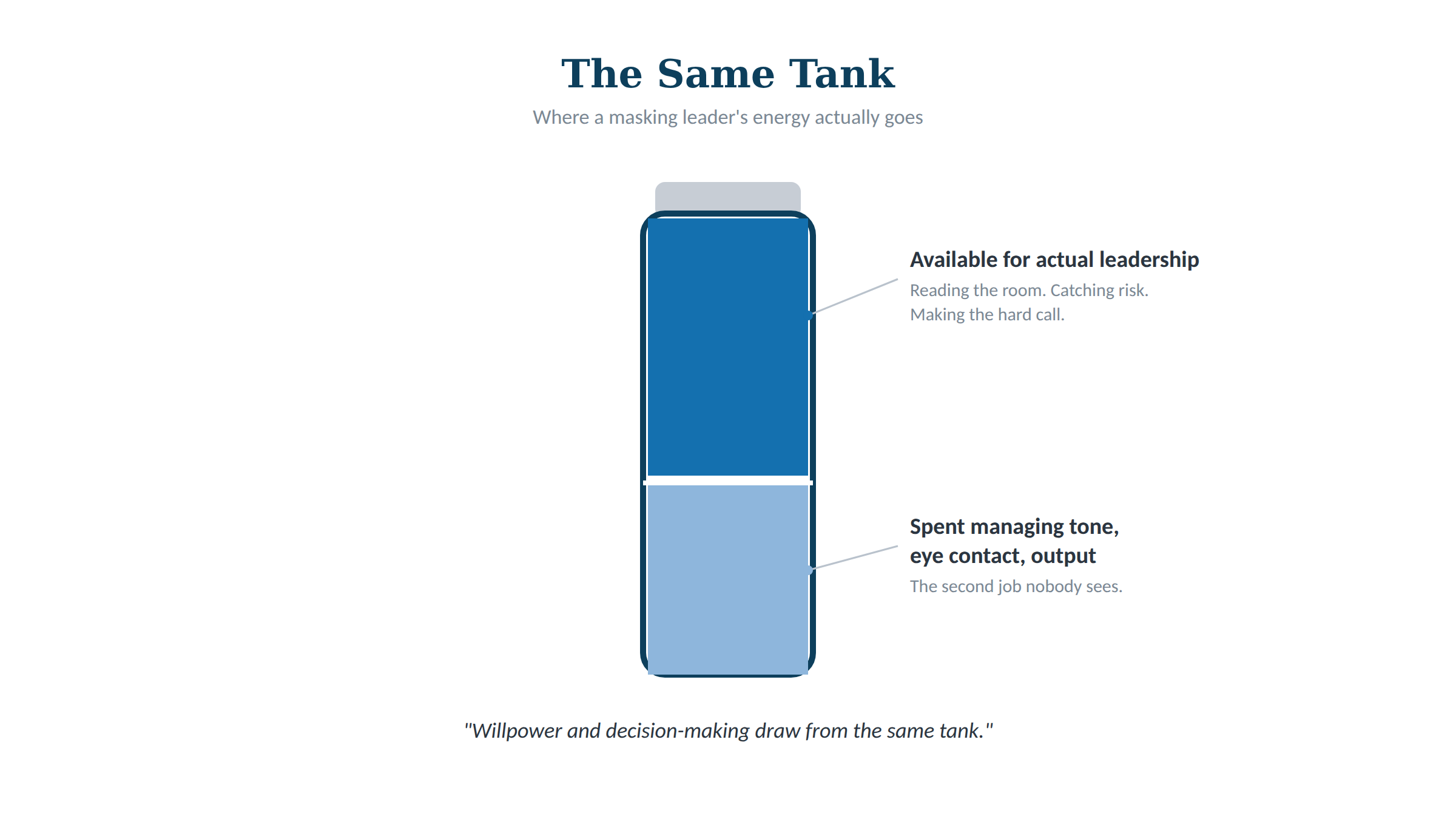
Masking isn’t free. It’s a second job you’re doing on top of your first one, and most leaders never put it on the balance sheet.
Cognitive load you don’t get back
Every meeting where you’re monitoring your tone, tracking whether you’ve made “enough” eye contact, suppressing the urge to stim, or translating your first honest reaction into something more palatable is all working memory and attention pulled away from the actual problem in front of you. You can do it. Most ND leaders are very good at it. But it’s not additive to your leadership capacity, it’s subtractive. You have less brain available for the strategic call because a chunk of it is on guard duty.
Decision fatigue that shows up as bad decisions
Willpower and decision-making draw from the same tank. If you’ve spent your morning managing how you come across in three meetings, the decision you make in the fourth or the one that actually matters, the pricing call, the hire, the hard conversation with a co-founder is being made by a more depleted version of you. Leaders rarely connect their 4 p.m. impulsive call to their 9 a.m. masking marathon. But it’s the same tank.
Leadership as performance instead of practice
When a large percentage of your energy at work goes into seeming like a leader that is composed, neutral, and unbothered is less of it goes into being one: reading the room accurately, catching the thing your team is afraid to say, noticing your own gut instinct before you’ve talked yourself out of it. Over time, the performance becomes the job, and the actual leading happens in the margins.
The Cruel Irony: Masking Hides the Exact Traits That Make You a Great Leader
This is the part that gets missed in most conversations about masking at work. It’s not just uncomfortable — it’s a strategic loss, because the traits leaders sand down to look “normal” are frequently the same traits driving their edge.
• Pattern recognition. Many ADHD and autistic leaders spot connections and risks other people miss three steps later. Masking often means holding back the observation until it’s been re-packaged as something more socially palatable, by which point the moment, or the money, has passed.
• Hyperfocus. The ability to go deep and produce work in hours that would take someone else days is a real competitive advantage, one that gets throttled when a leader is spending energy performing “consistent, steady output” instead of working with their actual rhythm.
• Directness and honesty. The instinct to say the true thing plainly is exactly what teams need from a leader in a crisis, a hard pivot, or a tense negotiation. Masking teaches leaders to soften truth into something safer and less useful, which trains a team to distrust the polish and wonder what’s underneath it.
• Authenticity as a trust signal. Teams don’t fully trust a leader they can’t read. When you’re masking well, you’re unreadable by design which means your team is managing you the way you’re managing everyone else, and that mutual guardedness becomes the culture, whether you intended it or not.
You didn’t become a strong leader in spite of your brain. You built the version of leadership you have because of it. Masking asks you to hide the source material.
The Real Tension: “Professional” vs. Authentic at the Top
Here’s what makes this harder for founders and senior leaders than it is for an individual contributor: you don’t just mask for your own comfort. You mask because you believe the company needs you to for the board, for investors, for the team who’s watching how you handle pressure and calibrating their own behavior off of you.
That’s a real tension, not a made-up one. “Professionalism” in most rooms still means composed, linear, moderate in tone, predictable. A lot of ND leadership instincts are none of those things by default, and pretending otherwise in a fundraising conversation or a board update genuinely can matter to outcomes in the short term.
But there’s a difference between strategic communication and full-time masking, and most leaders never separate the two. Strategic communication is choosing how to frame a message for a specific audience and every good communicator does this, neurodivergent or not. Full-time masking is suppressing your actual cognitive and emotional experience in nearly every room, all day, as a baseline operating mode. One is a skill. The other is an unsustainable tax that eventually shows up as the blunt, checked-out, disconnected version of you that your team didn’t sign up to work for.
The founders who burn out hardest aren’t usually the ones who lead differently. They’re the ones who spent years convinced that leading differently and leading well were mutually exclusive and paid for that belief with their energy, their decision quality, and eventually their sense of who they even are outside the performance.
A Path Toward Strategic Unmasking
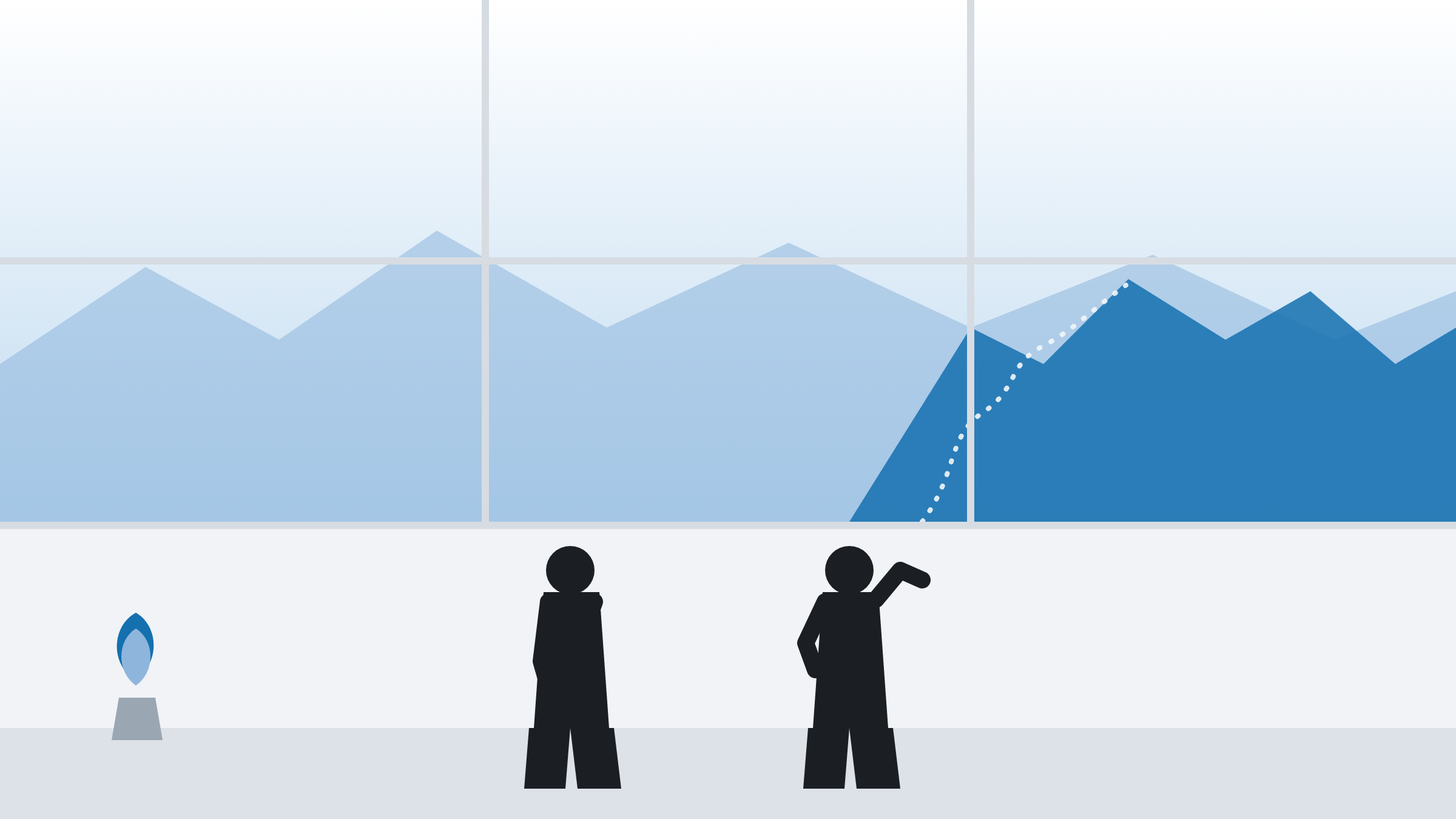
The answer isn’t “stop masking everywhere, all at once.” That’s not realistic, and for most leaders it’s not even desirable — some rooms genuinely call for more filter than others. The goal is choosing where masking is actually serving you and where it’s just a habit you never questioned.
Start by auditing, not overhauling
Pick one recurring meeting such as a leadership sync, a 1:1, or a standup and notice what you’re editing out of habit versus intention. Is the tone-softening necessary for that room, or is it reflexive? You’re not trying to change everything Monday morning. You’re trying to see the pattern clearly for the first time.
Unmask with your team before you unmask with your board
The lowest-risk place to lead more authentically is usually the room you have the most control over: your own team. Naming your working style out loud, “I think out loud and change my mind as I talk, that’s part of my process, not indecision” does more for trust and psychological safety than months of careful, masked consistency ever will.
Build a culture that needs less masking from everyone, not just you
The leaders who get the most sustainable relief aren’t the ones who personally became braver. They’re the ones who changed the environment and clearer async communication norms, meetings designed around how people actually think instead of how meetings have always looked, direct feedback treated as respect instead of rudeness. When the culture requires less performance from you, it usually requires less from your team too, and that shows up in retention and output, not just in how you feel.
Get support that’s built for this, not retrofitted
Generic leadership coaching is often built around a communication style that isn’t yours, which means it quietly asks you to mask better rather than lead more sustainably. Working with someone who understands the neurodivergent leadership experience firsthand changes the question from “how do I perform this correctly” to “how do I build a leadership style that’s actually mine and still works.”
FAQ: Masking at Work as an ADHD or Autistic Leader
Is it ever okay to mask at work? Yes with strategic, situational adjustment is a normal part of leading anyone, in any room. The issue isn’t adapting your communication for context. It’s when masking becomes a constant, unexamined default rather than an occasional, deliberate choice, and starts costing you energy and decision quality every day.
How do I unmask without losing credibility with my team or investors? Start small and specific rather than announcing a total shift. Naming one aspect of how you work such as how you process ideas out loud, how you prefer feedback, why you might need a moment before answering all builds credibility, because specificity reads as self-awareness, not as an excuse.
Is masking the same thing as being professional? No. Professionalism is about how you treat people and deliver on commitments. Masking is about suppressing your actual cognitive or emotional experience to look like a different kind of leader than you are. You can be fully professional while working, communicating, and leading in a way that’s authentically yours.
How do I know if masking is contributing to my burnout? A useful marker: do you feel more exhausted after meetings where nothing hard actually happened than after ones with real substance? That gap a depletion without a matching workload is often the masking tax, not the work itself.
Should I tell my team or board I’m neurodivergent? That’s a personal decision with no universal right answer, and it’s worth thinking through deliberately rather than defaulting to silence or full disclosure. What matters more than the label is whether you’re building a way of leading and communicating that doesn’t require you to hide how your brain actually works.
You Don’t Have to Choose Between Leading Well and Leading Like Yourself
Masking convinces high-performing leaders that the two are the same trade-off: hide the real you, or lose credibility. They’re not. The leaders who build the most durable companies and the healthiest teams are usually the ones who stopped spending their best energy on the performance and started spending it on the work.
If you’re a founder or senior leader who’s tired of rehearsing yourself before every hard conversation, you don’t have to figure out the next step alone. A Pathfinding Call with Ali is a no-pressure conversation about where you are, what’s costing you the most right now, and whether working together makes sense — no pitch, just a real look at the terrain ahead. Book a Pathfinding Call and start building a way of leading that’s actually yours.
