

Diagnosed as an Adult, Already Running a Company: What Actually Comes Next
You're forty-one. You have a company, a team, a board, revenue riding on the calls you make every day.
And you just got a diagnosis you didn't see coming.
ADHD. Maybe autism too. Not at nineteen, while you're figuring out a major but right now, in the middle of running everything you built.
The relief and the grief show up together. Relief, because it finally explains the boom-bust cycles, the meetings you white-knuckled through, the way you always felt one beat behind your own competence. Grief, for every year you spent thinking the problem was that you just weren't disciplined enough.
Both are true at once. That's disorienting, and almost nothing written about a late diagnosis is written for someone standing where you are; leading a company, not job-searching or fresh out of school.
So I wrote the guide I wish existed for this exact moment. It covers:
→ Why so many high-achievers are being diagnosed well into their careers right now
→ A four-question framework for deciding who actually needs to know: your team, your cofounder, your board
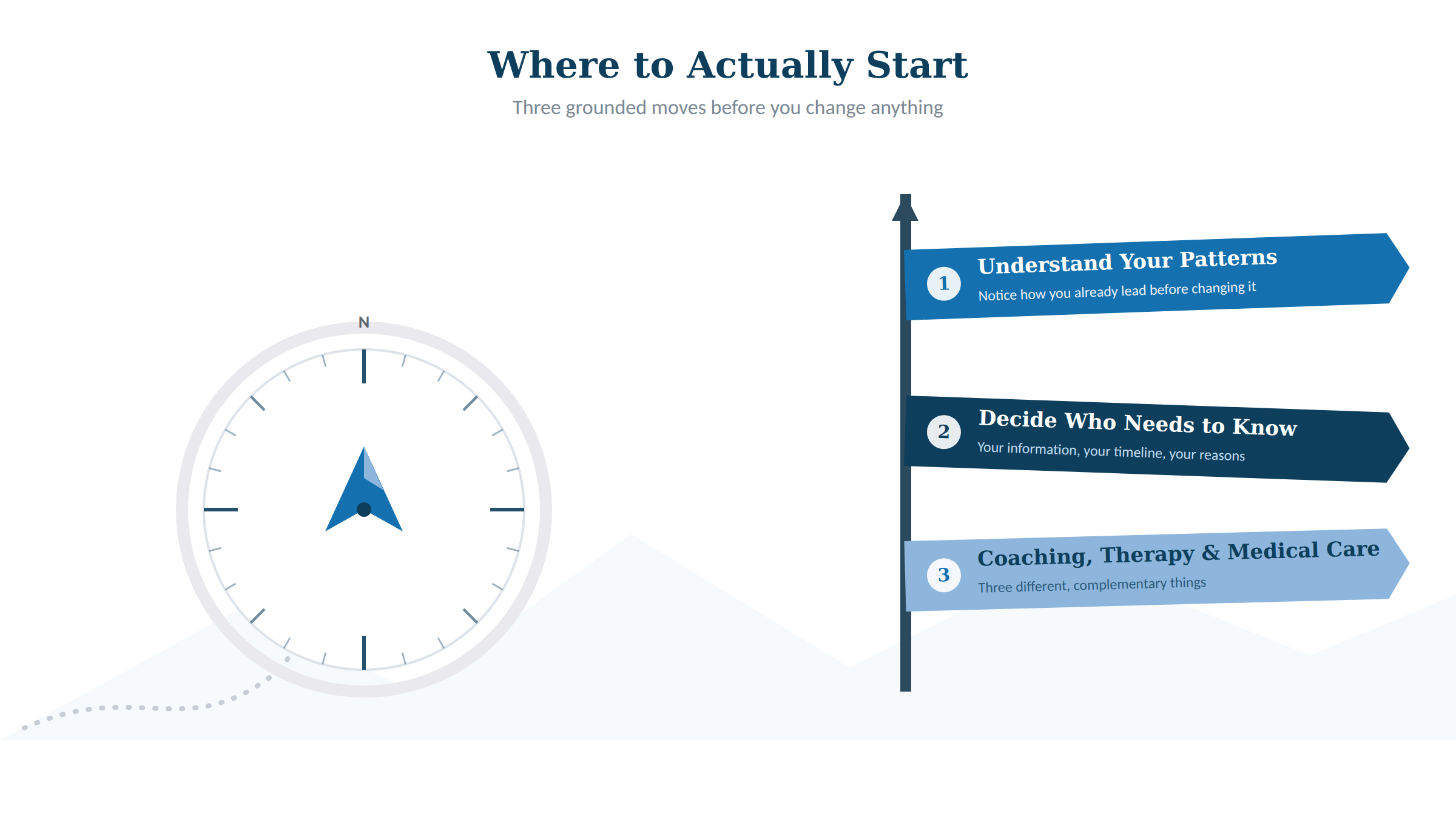
→ Where to actually start (hint: it's not "get more sleep")
→ Why coaching, therapy, and medical care are three different things, and you probably need pieces of all three
You didn't luck your way into what you built. You built it with a brain nobody had explained to you yet. Understanding it now doesn't threaten any of that, it just gives you a clearer set of tools to keep building.

Boom-Bust Cycles: Why Neurodivergent Founders Swing Between Hyperfocus and Burnout and How to Break the Pattern
Three weeks before launch, you were unstoppable. Ninety-hour weeks felt easy. You rewrote the onboarding flow at 2am because a better idea wouldn't let you sleep.
Launch day came and went well. Then you disappeared.
Not physically — you were still there. But Slack sat unread for two days. A simple vendor decision felt like it needed more energy than you had. Your co-founder started every message with "no rush, whenever" — their polite way of saying they'd noticed.
You weren't lazy. You were running on empty after weeks of running on nothing but adrenaline and dopamine, and nobody told you the bill would come due like this.
This is a real, documented pattern in a lot of ADHD and autistic brains — hyperfocus runs on borrowed energy, and when it ends, there's no gradual landing. There's a crash.
And when you're the founder, there's no manager or team structure absorbing the dip. Your team reads your energy as the weather. Investors notice the inconsistency before they notice the cause.
My latest post breaks down what's actually happening in your brain, why "just push through it" makes the next crash worse, and a four-part framework for building a business that has somewhere for the cycle to go — instead of taking the company down with it.
You don't have to keep white-knuckling this.
#ADHDFounders #NeurodivergentLeadership #Hyperfocus #Burnout #AuDHD #ExecutiveCoaching
The Cost of Masking: What High-Performing Neurodivergent Leaders Give Up to “Fit In”
Ten minutes before a board call, a founder is standing in her kitchen rehearsing how to sound calm.
Not preparing the update — she already knows those numbers cold. She's rehearsing her tone. Practicing the pause before she answers, so it doesn't come out too fast, too blunt, too much.
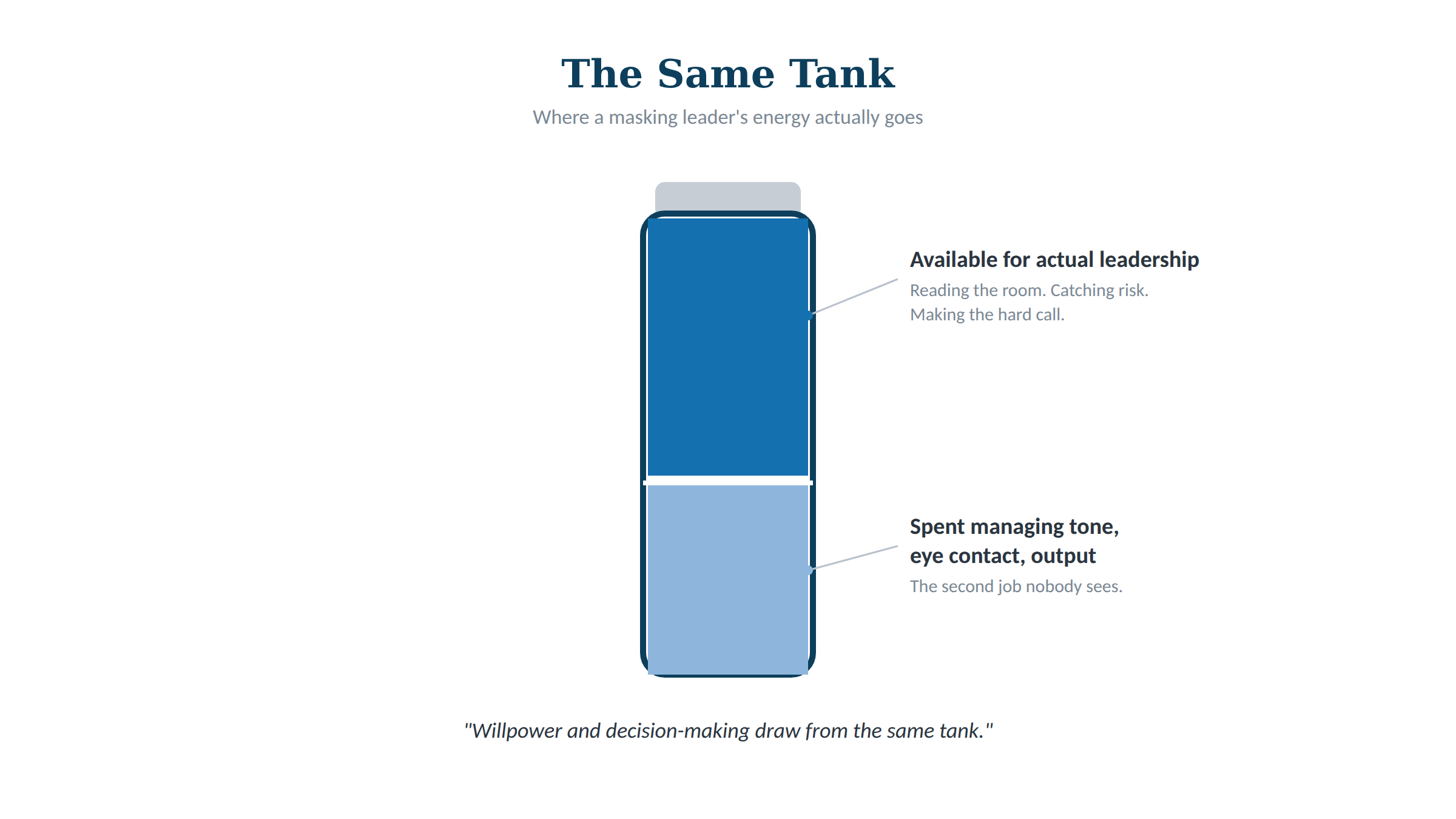
She's done this before every investor call for three years. By the time she logs on, she's spent more energy managing how she'll be perceived than she has on the actual content of the meeting.
That's masking. And here's what doesn't get said enough about it: it's not free. It's a second job running on top of your first one — and most leaders never put it on the balance sheet.
Worse, the traits leaders sand down to "look normal" — pattern recognition, hyperfocus, blunt honesty — are usually the exact traits driving their edge. Masking doesn't just cost energy. It costs decisions, culture, and trust.
My latest post breaks down what masking actually costs a leader day to day, and a path toward strategic unmasking — not "stop masking everywhere," but knowing where it's serving you and where it's just a habit nobody questioned.
You don't have to choose between leading well and leading like yourself.
#NeurodivergentLeadership #ADHDFounders #AuDHD #Masking #ExecutiveCoaching

Why “Time Blindness” Isn’t a Character Flaw: A Guide for ADHD Founders
It's 11:40pm the night before your board meeting.
You told yourself you'd finish the deck by dinner. Instead you're three tabs deep in a competitor's pricing page, the slides are half-built, and you're thinking: I had all week for this. Where did the time go?
If that's your Tuesday , you're not lazy, and you're not bad at your job.
You're likely dealing with time blindness: a real, documented feature of ADHD brains where your internal sense of time doesn't track with the clock on the wall. It's not a "past, present, future" relationship with time. It's "now" and "not now" and a deadline two weeks out simply doesn't feel real until it's two hours out.

Building With Your Brain’s Strengths: A Framework for Neurodivergent Leaders
A neurodivergent leadership framework for ADHD/autistic founders who are tired of forcing a neurotypical mold. Real strategy, no burnout required